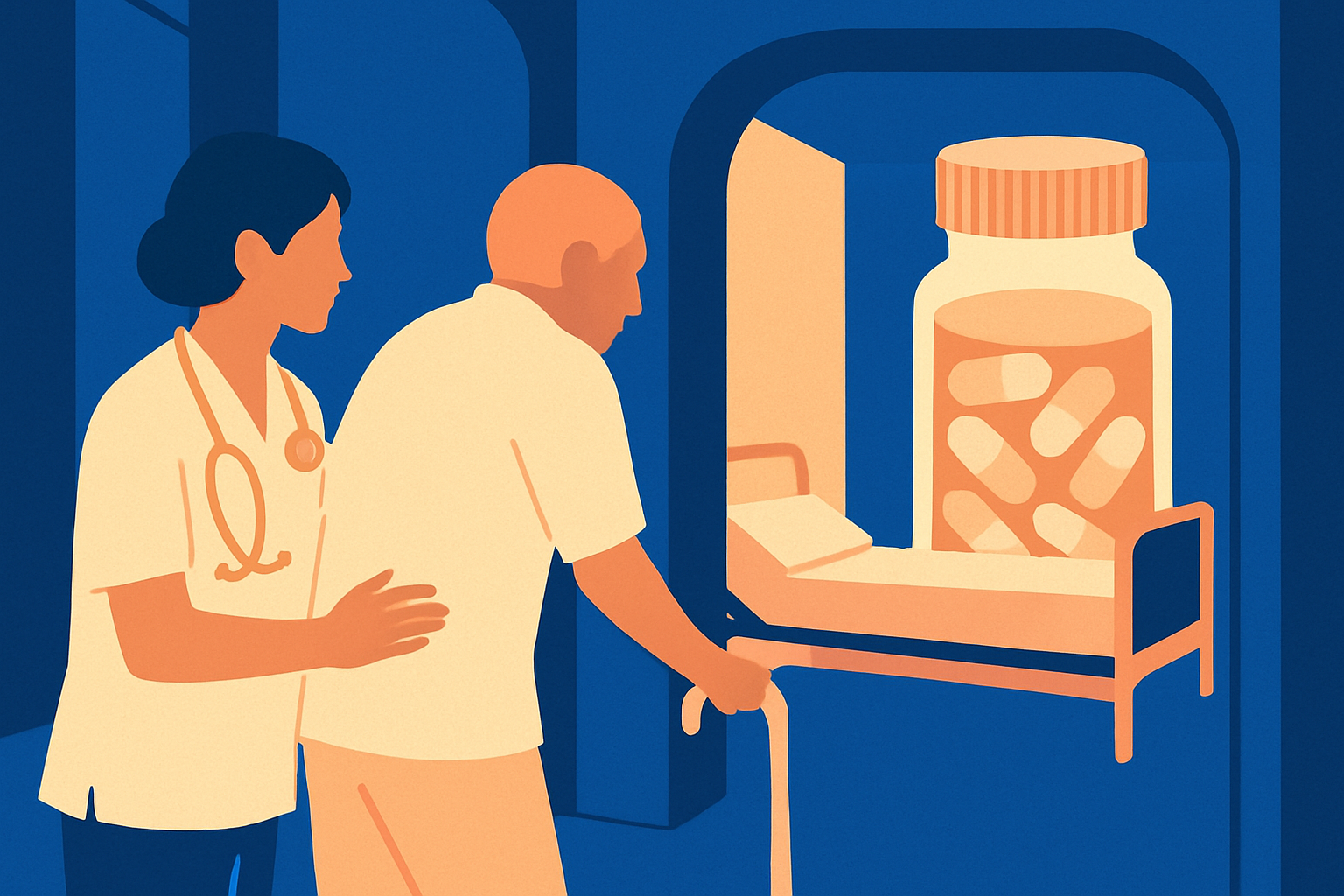
Roughly one in five older adults discharged from a U.S. hospital is readmitted within thirty days. The good news: most of those readmissions follow the same three failure patterns, and most are preventable following simple steps.
This guide walks through why hospital readmissions happen — the medication errors that account for a disproportionate share, the follow-up appointments that quietly never happen, the warning signs that surface for three days before anyone calls — and how to set up the first two weeks at home so the next call is not back to the ER.
TL;DR: Most readmissions trace back to three patterns: medication taken at the wrong dose or twice from two different bottles, a follow-up appointment that never got booked, and a warning sign caught too late. The fix is also three things: a real medication reconciliation at home, the follow-up booked before discharge, and an early call to the after-hours nurse line the first time something feels off.
Pattern one: the medication that came home wrong
Medication problems are the single most common cause of preventable readmissions in older adults. Three failures account for most of these errors. The first is duplication — the hospital starts a new blood-pressure medication and the family keeps giving the old one because it is in the pill organizer. The second is omission — a blood thinner is paused for surgery and never restarted at home. The third is dose change — a familiar pill comes back at half the strength but in a bottle that looks the same.
The fix is small, physical, and old-fashioned. Before discharge, ask for the most recent printed medication list. At home, gather every bottle and box on the kitchen counter — including supplements, over-the-counter pain relievers, and anything in the bathroom cabinet. Match each bottle to the list. Anything on the list that is not on the counter, write down. Anything on the counter that is not on the list, write down. Take both lists to the first follow-up visit or the pharmacy, and ask for a walkthrough.
The companion post What is medication reconciliation walks through this exercise in more detail, including the three questions to ask the pharmacist that catch most errors.
Pattern two: the follow-up that never happened
A surprising share of readmissions trace back to a follow-up appointment that was supposed to happen and never got scheduled. The discharge summary names a provider and a window — "within seven days," "within two weeks." If the appointment is not booked before discharge, the to-do bounces between the family and the primary-care office and lands on nobody. Two weeks later, a new symptom shows up and the ER becomes the default.
Leave the hospital with the first appointment on a calendar, not on a to-do list. If the case manager says, "Call the office on Monday," ask whether they can call on your behalf before discharge. Many can, and many will. If a specialist is involved, get the name and phone number while you are still in the meeting. Save both numbers in your phone before you leave the building.
Pattern three: the warning sign caught too late
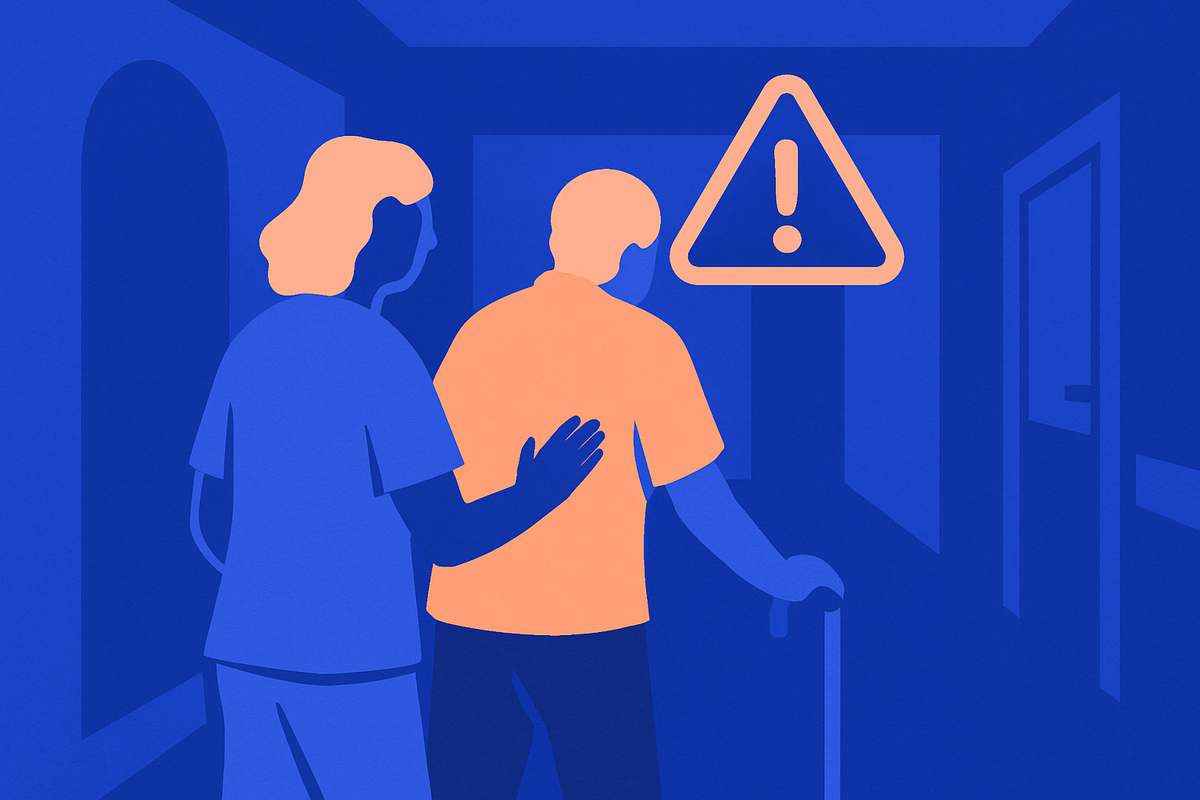
Most preventable readmissions have a three-day warning. A new cough that nobody mentions. A leg that is a little more swollen than yesterday. Confusion that the family thinks is just 'tired.' By the time someone is alarmed enough to call 911, the small problem has become a big one. The fix is the early call — the call at 9 p.m., the call the family hesitated to make, the call that the after-hours nurse line exists for.
- Same time, same questions, every dayPick a daily check-in time. The same five questions every day: how did you sleep, any new or worse pain, eating and drinking, swelling, confusion. The point is the trend over a week — small drift is what providers want to know about.
- Tape the warning-signs page to the fridgeMost discharge summaries include a 'when to call the doctor' or 'red flags' page specific to the diagnosis. Tape it where every adult in the house and any visiting helper can see it.
- Save two numbers in every adult's phoneThe after-hours nurse line and the follow-up provider. The contact saved on the kitchen wall sticky note will not be in your phone when you are in the car.
- Better Safe than SorryNurse lines exist for "is this something to worry about?" — that is the entire point. The staff can triage what you describe and give guidance over the phone.
- Write down what you saw, whenVague observations turn into useful sentences when you write them as you notice them. "Last Tuesday her ankles were a little puffy" is far more useful than "she has not seemed quite right."
- Pick one family contactNot the whole family — one person who is the call-the-doctor person. The other siblings can still help; one named contact prevents the 'I thought you were calling them' gap.
What the system already does (and doesn't) to help
Many hospitals invest in discharge planning, transition-of-care calls, and pharmacist-led medication reviews. If the hospital offers a 'transition of care' or 'post-discharge follow-up' phone call, say yes. If they do not, request one.
Many primary-care offices also offer a Transitional Care Management (TCM) visit within seven to fourteen days of discharge — it is the most under-used Medicare benefit on the discharge list. Ask the case manager whether your parent qualifies, and ask the primary-care office to book it.
The companion post After the ER: the first 24 hours at home walks through the home setup for the highest-risk window of all — the day of discharge. The two posts pair: the first 24 hours sets up the next 14 days.
When to call vs. when not to
The triage tree is not complicated. Call 911 for the things that have to be evaluated in an emergency department right now: chest pain or pressure, sudden one-sided weakness or slurred speech, severe shortness of breath, a fall with a head strike, severe bleeding, sudden change in consciousness, or anything the discharge papers specifically name as 'call 911.' Call the after-hours nurse line for everything else that feels wrong but is not in the 911 list. Call the follow-up provider, the home-health nurse, or the pharmacist for the less urgent questions during business hours.
For the broader 48-hour playbook this 30-day window fits inside, see The 48-Hour Hospital Discharge Plan. For the longer pillar of related guides, the Hospital Discharge hub has the full set, including the three things to do after a rehab stay.
A note on what helps: Aging Sidekick can help you turn the readmission-prevention plan into one printable page — the daily check-in, the warning signs, the medication list, the nurse-line number, the follow-up appointment — built from a fifteen-minute voice intake. Free to start. For chest pain, stroke symptoms, or trouble breathing, call your local emergency number.
Plan a safe discharge with Aging Sidekick
Aging Sidekick walks you through every question, document, and decision before your parent leaves the hospital — built around the specific care situation in front of you.
Start your discharge planSee how Aging Sidekick helps →