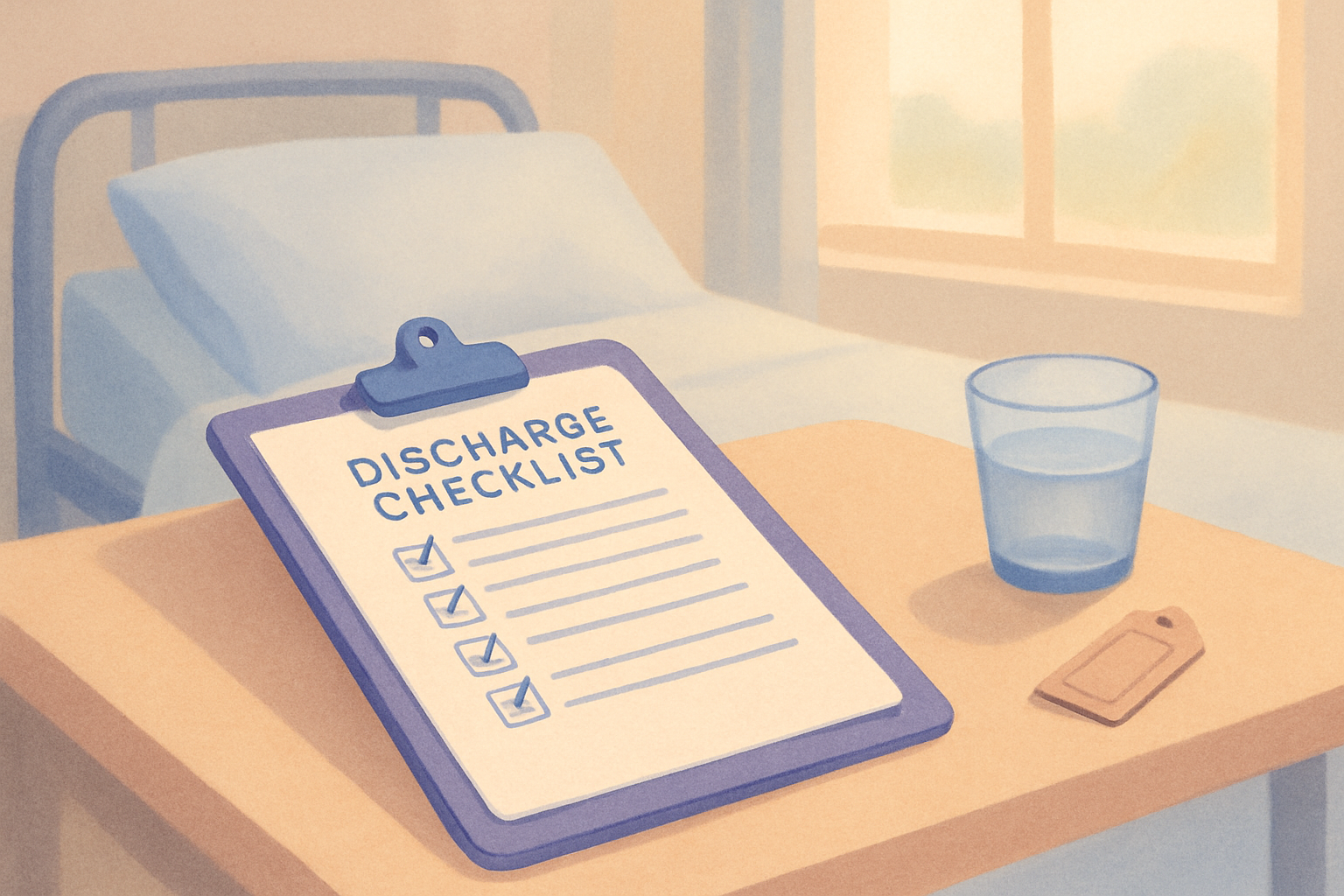
Hospital discharge can feel like a sprint. The papers come fast, the nurse is busy, and you are trying to keep one ear on the doctor and one eye on your loved one. Here are the 12 questions that, asked out loud, tend to prevent a 2 a.m. phone call.
Before the diagnosis fades from memory
1. What is the diagnosis, in everyday words? Ask the discharge nurse to translate any medical term you do not recognize. Write it down. If something is still unclear, ask again — there are no points for not interrupting.
2. What changed during this stay? A new condition? A worsening of an old one? Knowing the "why we are here" makes the next steps make sense.
Medications — the single biggest cause of readmission
3. Which medications are new, which were stopped, and which were changed? Ask for a printed list with the name, dose, timing, and what each medication is for.
4. Are there interactions to watch for? Some new prescriptions do not play well with the over-the-counter pills already in the cabinet. Ask the nurse or pharmacist to scan the home medication list.
5. What is the plan if a dose is missed? Make sure the answer is specific — "call us if it has been more than X hours" — not just "follow the label".
Follow-up — book it before you leave
6. Who is the follow-up provider, when is the first appointment, and who is supposed to schedule it? Aim to leave the hospital with that appointment on a calendar, not on a to-do list.
7. Are any specialists in the plan? If so, get their names, phone numbers, and how quickly the first visit should happen.
Equipment and home setup
8. What equipment is coming home — walker, oxygen, hospital bed, commode? Confirm delivery time, who pays, and who shows the family how to use each item safely.
9. Are there home-safety changes that need to happen tonight? A bath mat, a clear path from the bed to the bathroom, a chair in the shower — small things prevent the next ER visit.
Warning signs and who to call
10. What warning signs should prompt a call to the doctor, and what warning signs mean call 911? Write both lists down. Confusion, fever, swelling, and sudden pain are common categories — but ask for the ones specific to this diagnosis.
11. Who do I call after hours? Save the nurse-line number in your phone before you leave the building. Late-night uncertainty is what readmissions are made of.
Caregiver readiness
12. What does my loved one need help with at home, and what can they do on their own? Be honest about what is realistic for the people who will actually be there. If anything feels too big, ask about home health, physical therapy, or short-term help.
A small note on emergencies
Aging Sidekick is a planning tool — not a medical adviser. For chest pain, sudden weakness, slurred speech, severe bleeding, or trouble breathing, call your local emergency number. For everything else, the nurse line and the follow-up provider are your first calls.
Sources
Want this as a printable checklist?
Aging Sidekick can turn the discharge papers into a one-page plan you can hand a sibling, a spouse, or a home-health aide.