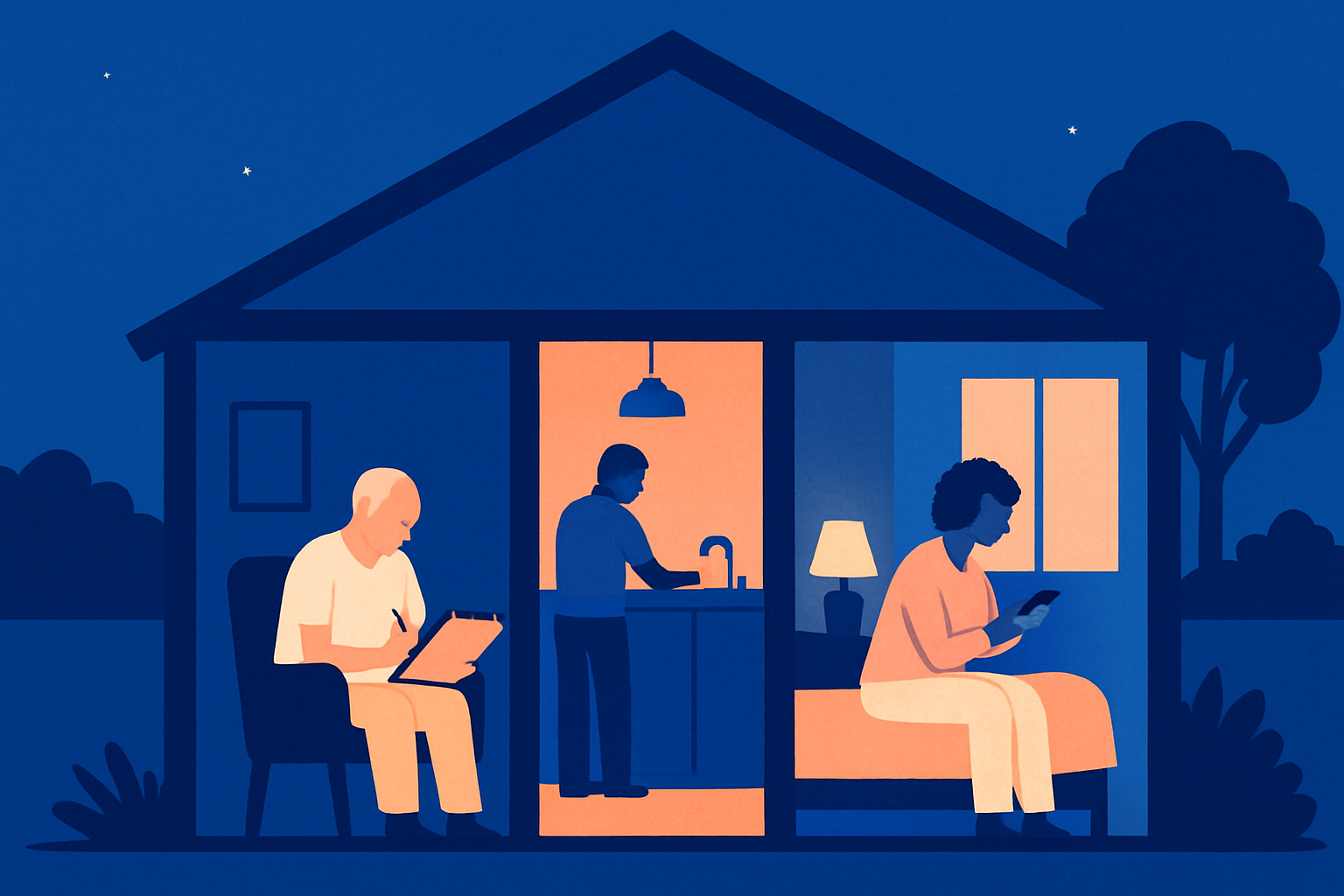
Solo agers — older adults without a spouse or adult children involved in their care — make up a growing share of the housing-decision question. Estimates from AARP put it at roughly one in five Americans over 65 today, and the share is rising. The housing decision for a solo ager is the same housing decision everyone else faces, with one difference that matters: nobody is going to make it on your behalf if you do not. The plan has to come from you.
This is the practical playbook. How to build the personal network that replaces the one a spouse or adult child would otherwise provide. How to name the decision-makers in writing before they are needed. How to choose the home that fits the rest of the plan. None of it requires a large income, a perfect health record, or a family on call. All of it benefits from being written down before it is needed.
The personal network: a small list, well-tended
The first piece of the plan is is often overlooked by solo agers: a personal network of three to five named people who know you, know each other, and know the basic outline of your plan. Not friends in the general sense — named people, in writing, with phone numbers, who have agreed to play a role in your care, when the time comes.
- A primary local contactA friend, a neighbor, a former colleague who lives within a reasonable drive and is willing to be the first call in an emergency. A solo ager without this person on the fridge sheet is often the solo ager who ends up in the emergency room with no advocate.
- A backup local contactA second person who can step in when the primary is traveling or unavailable. The backup does not need to know everything the primary does — they need to know how to reach the primary and the basics of the plan.
- A long-distance allyA trusted friend or cousin who is not in the daily picture but who can coordinate from a distance — the person who calls the doctor, the building manager, the home-health agency from a thousand miles away when the situation requires it.
- A professional contactA primary-care doctor, a geriatric-care manager, an elder-law attorney, or a financial planner who has a current picture of the plan. Not all four — one is enough; two or three is better.
The legal and decision-making layer
For a solo ager, the legal layer of the plan is more important than for someone with a spouse and adult children, because there is no fallback. Three documents do most of the work, and a solo ager who does not have all three should consider this the highest-priority project of the next quarter.
- A durable financial power of attorneyNaming one or two people to manage finances if you cannot. For a solo ager, the named agent is often a long-time friend, a younger cousin or niece, or a professional fiduciary. The conversation with the named agent is part of the document — they should know they are named and accept the role in writing.
- A healthcare power of attorney (or healthcare proxy)Naming one or two people to make medical decisions if you cannot. The healthcare agent is often a different person than the financial agent — pick people for who they are, not for convenience.
- An advance directive (living will)Your written wishes for end-of-life care, ideally accompanied by a POLST or MOLST form if your state offers one. The directive is a gift to whoever ends up in the room — it relieves them of a decision they would otherwise have to make under pressure.
The conversation is part of the plan: A legal document the named agent has never read is a document the named agent cannot act on quickly. Schedule a one-hour conversation with each named agent — coffee, a phone call, a video chat — to walk through what the document says, where the originals live, and what you would want them to do in three or four common situations. The conversation is the part that turns the document into a working plan.
The home that fits the rest of the plan
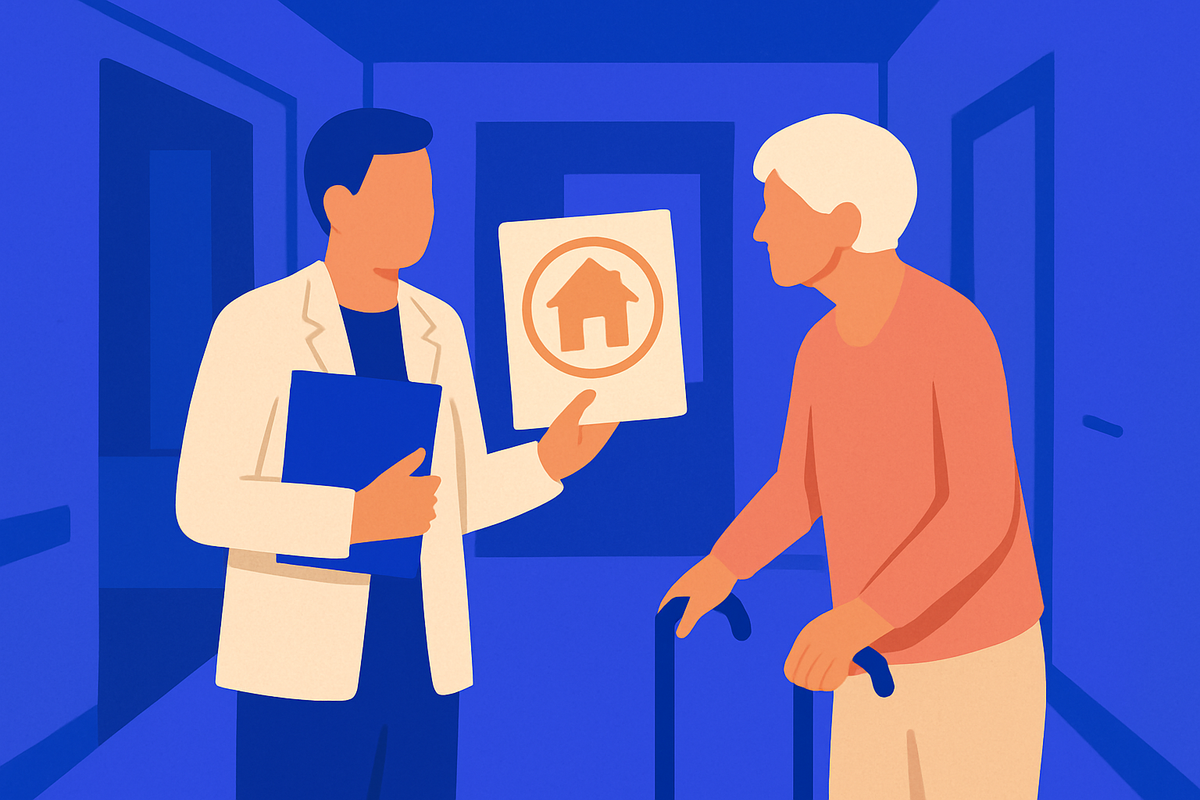
A solo ager's housing decision is shaped by one rule: the home has to fit the plan, not the other way around. A house that requires more in-home help than the personal network can sustain is a house that becomes a crisis the moment one of the named contacts is unavailable.
- A walkable neighborhood is worth a lotWhen the network is small, the geography around the home matters more. A pharmacy, a grocery, a coffee shop, and a public library within walking distance — or a short ride on reliable transit — replaces a meaningful share of the help a spouse or adult child would otherwise provide.
- An apartment, condo, or planned community over a single-family homeA building or community where neighbors notice when you do not pick up the mail, where there is a building manager during business hours, and where the maintenance is not your job. The cost differential is often less than people expect once the deferred maintenance on a long-held home is honestly priced.
- A senior community earlier than your peers might choose oneIndependent living often works dramatically better for a solo ager than for someone with a spouse or local children. The dining room is the network; the activities calendar is the social plan; the staff is the watchful eye that nobody at home is providing.
Where to write it all down
One physical folder, in a known location, with copies of the legal documents, the network list, the fridge sheet, the insurance cards, and a one-page narrative of the plan in your own words. Then a second copy at a long-distance ally's home or a safe-deposit box. Solo agers who keep a 'where the papers live' note on the fridge alongside the emergency-info sheet make every subsequent professional interaction easier — the home-health aide, the geriatric-care manager, the hospital social worker. The papers exist so someone else can find them.
Two adjacent reads. The emergency preparedness for seniors at home piece pairs directly with this one — the fridge sheet, the go-bag, and the contact tree are the operational expression of the network. The right-sizing conversation covers the housing-decision talk that, for a solo ager, is mostly a conversation with yourself and the named agents rather than with a spouse or adult children. The full housing-decision walkthrough sits at the stay-or-move decision guide, and the broader pillar lives at the Aging in Place & Moving hub.
Sources
About this post: Originally inspired by Cyndie Taylor's writing at taylormademoves.com — this is a fresh, expanded version written for the Aging Sidekick audience, not a republication.
Read Cyndie's original piece on taylormademoves.com — and find more of her writing on senior moves and aging in place at taylormademoves.com.
Run a 3-minute home safety audit
Walk through your parent's home one room at a time — kitchen, bathroom, bedroom, stairs — and Aging Sidekick flags the fall-prevention changes that matter most. Free, no signup needed for the audit itself.
Start the safety auditSee the full Aging Sidekick plan →