A move to a new home or senior living community can be hard for any older adult; for a person living with dementia it can be one of the most challenging weeks of the year. The disorientation that follows a change of environment is well documented, and the choreography that protects against it is small, specific, and learnable. The families that do this well do not do anything heroic; they do a handful of small things in the right order, on the right day, with the right people in the room.
This is the practical guide to a memory-care move. What changes from a typical senior move, the timing decisions that matter most, the choreography of move day, the role of the family and the staff in the first week, and the small environmental cues that make the new place feel familiar faster.
Three things change with dementia in the picture
A typical senior move is a logistics project with an emotional layer. A memory-care move is an emotional project with a logistics layer. Three concrete things change.
- The older adult is rarely in the empty house on move dayIn a typical senior move this is a recommendation; in a memory-care move it is close to non-negotiable. The empty rooms — the source of the disorientation — are visited only by the move team, never by the person living with dementia.
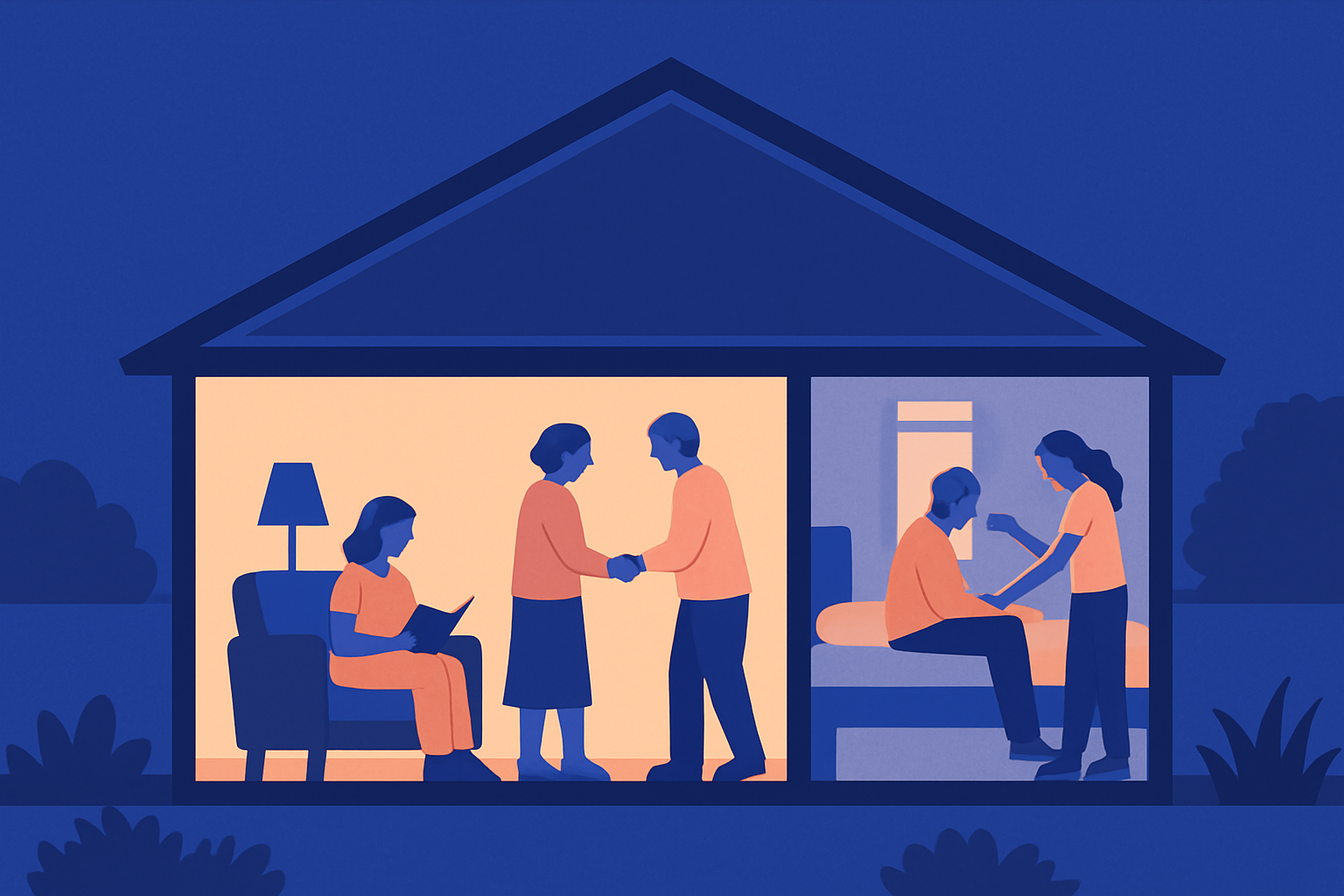
- The new room is set up before the resident arrivesThe bed made, the lamps lit, the photographs on the dresser, the favorite chair in the corner, the meaningful object on the nightstand — the room is recognizable as theirs before they walk through the door.
- The first conversation is shorter and lighter than the family expectsA long arrival speech is overwhelming. A short, warm, present moment — "your chair is by the window; here is your sweater; the dining room is down the hall, and lunch is in twenty minutes" — is dramatically more useful than an explanation of the building.
Timing decisions that matter most
The single biggest decision in a memory-care move is when to make it. This is often earlier than the family thinks it’s needed. Three signals consistently move families from 'we can manage at home' to 'the move needs to happen' — and the families I work with overwhelmingly report that the move went better than they expected, and that they wish they had made it three to six months earlier.
- Sleep disruptionWhen the person with dementia is up most of the night and the spouse caregiver has not slept through the night in months, the household is no longer safe. Memory-care communities sleep on shifts; a family caregiver does not.
- A wandering or exit-seeking patternA locked memory-care neighborhood is designed for this; a home is not. The technology workarounds (door alarms, GPS pendants) help in the early stages and are not a long-term substitute for a specially designed environment.
- A second person needed for routine careWhen a single caregiver can no longer manage the basics — bathing, dressing, a transfer from chair to bed — a community with trained staff doing this on a routine is dramatically safer and often less expensive than the in-home equivalent.
Move-day choreography
The choreography is the difference between a calm move-day and a traumatic one. The principle: minimize the empty-house experience, maximize the recognizable new-room experience.
- Day before — the room is set upA small team (often the Senior Move Manager plus one family member) sets up the new room the day before. The bed is made with the resident's familiar bedding. The framed photographs are on the dresser. The favorite chair is placed by the window. The closet is stocked with familiar clothing.
- Morning of move — the resident is somewhere familiarA friend's home, a family member's home, an outing planned around something the resident enjoys. Not in the empty house. Not at the new community greeting the truck. The empty rooms are not the last thing they see at home.
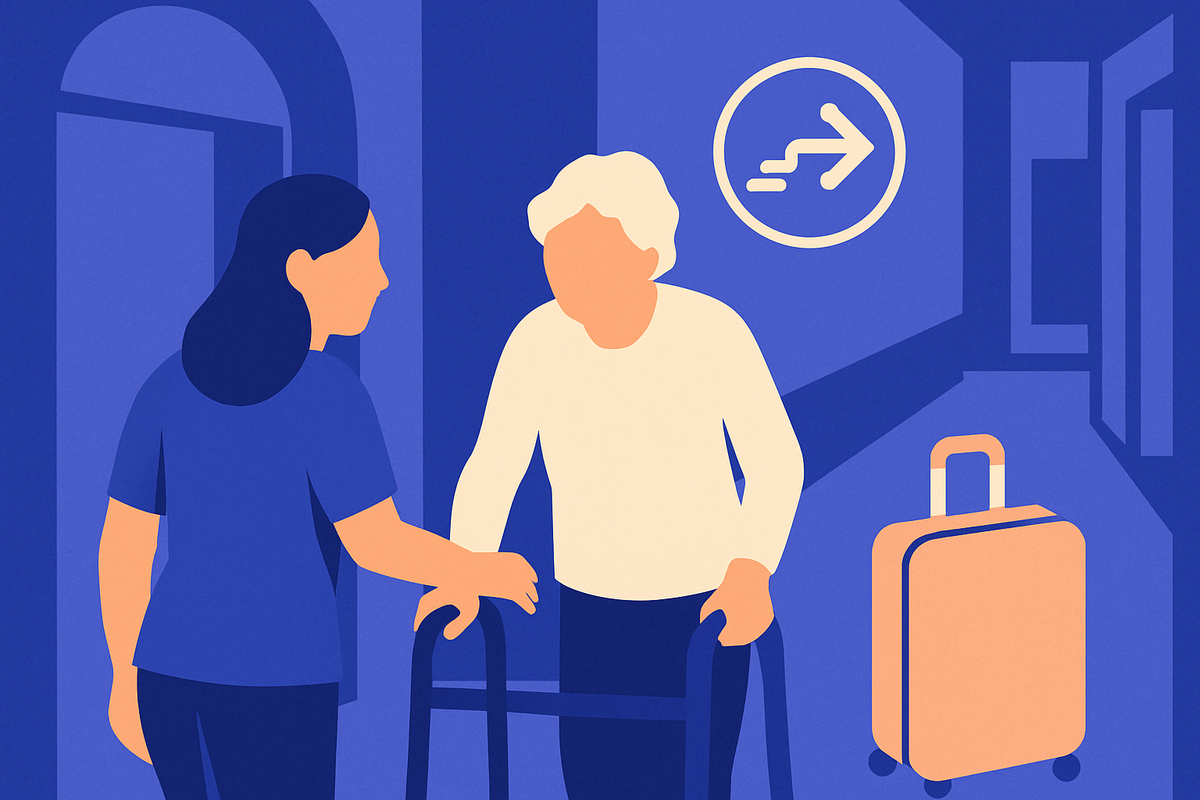
- Mid-afternoon arrivalThe resident arrives at the new community after lunch, with one or two trusted family members. The staff is briefed and present but not overwhelming. The first stop is the room — the recognizable one, with the chair and the photographs and the sweater on the bed.
- Dinner in the dining room with one family memberA meal in the new dining room with a trusted person, then a short walk back to the room before bedtime.
The first week: The community staff often asks families to limit visits for the first three to seven days. The instinct is to visit constantly; the evidence is that brief, predictable visits — one short visit a day, ideally at a consistent time — help the resident settle into the community's routine. The staff is not asking families to stay away; they are asking families to let their loved one setting into the routine.
Environmental cues that help
A memory-care room that feels familiar on the first day is dramatically easier to settle into than a room that does not. The cues are small.
- Three to five framed photographs from the family wallNot a wall of dozens — three to five recognizable faces, placed at eye level by the bed and the chair. Too many photographs become noise; a small set becomes orientation.
- The same bedding from homeSmell and texture are powerful memory cues. The familiar pillow, the familiar quilt, the familiar pajamas — these do as much work in the first week as any conversation.
- A single favorite object on the nightstandA small Bible, a watch that was a husband's, a hand-stitched cushion — one object the resident will recognize, not a museum of meaningful things.
- A clock with the date and day of the week visibleA large-faced digital clock that displays "Tuesday, May 26" — a small thing that quietly reduces the orientation question that plays in the resident's head all day.
A memory-care move sits inside the broader move framework — the senior move timeline is the parallel calendar, and the Senior Move Manager who runs both kinds of move is covered in choosing a Senior Move Manager. The clinical and dementia-stage context lives in the Dementia & Alzheimer's pillar; the housing-decision walkthrough for the family lives at the stay-or-move decision guide, and the broader pillar lives at the Aging in Place & Moving hub.
Sources
Written by Cyndie Taylor, NASMM. More from Cyndie at taylormademoves.com.
Run a 3-minute home safety audit
Walk through your parent's home one room at a time — kitchen, bathroom, bedroom, stairs — and Aging Sidekick flags the fall-prevention changes that matter most. Free, no signup needed for the audit itself.
Start the safety auditSee the full Aging Sidekick plan →